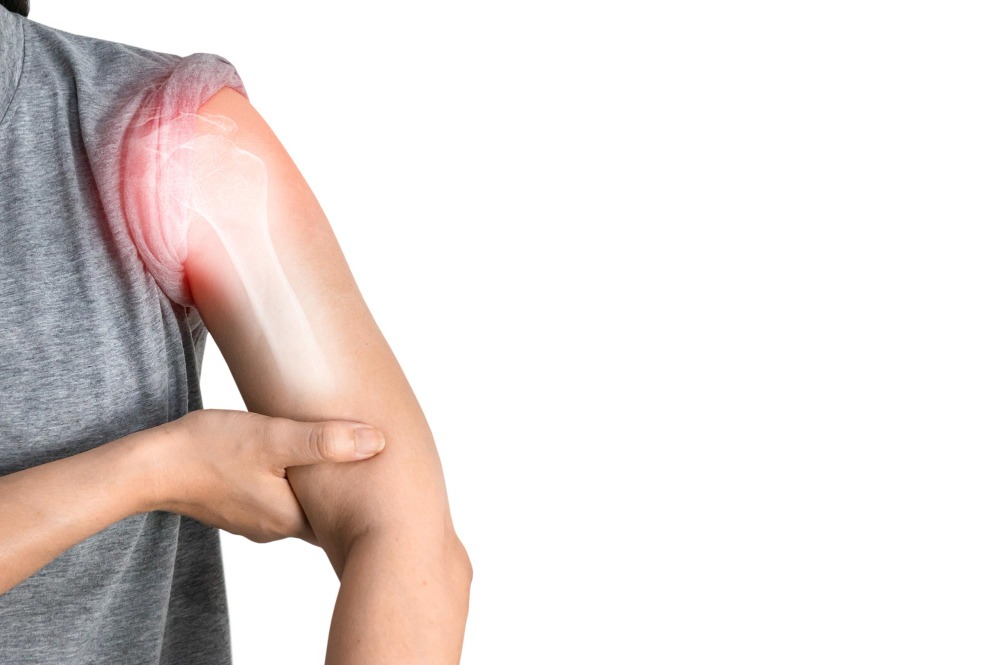
Shoulder pain can arise from several conditions, so identifying a rotator cuff tear on an MRI does not automatically mean an operation is required. Some tears respond well to rehabilitation and activity modification, while others may cause persistent weakness or functional limitation.
Understanding when rotator cuff tear surgery is considered can help patients make a more informed treatment decision.
What Does the Rotator Cuff Do?
The rotator cuff is a group of muscles and tendons surrounding the shoulder joint. These structures contribute to shoulder movement and help keep the ball of the shoulder centred during activity.
A tear may develop gradually through degeneration or occur suddenly after trauma.
Patients can experience:
- Pain when raising the arm
- Night pain
- Difficulty sleeping on the affected shoulder
- Weakness
- Difficulty reaching overhead
- Problems lifting objects
- Reduced sports performance
A traumatic tear can sometimes produce noticeable weakness immediately after injury.
Surgery Is Not Decided From MRI Findings Alone
MRI provides valuable information about tear size, location, tendon condition, muscle quality, and associated shoulder abnormalities.
However, imaging is only one part of decision-making.
Age, symptoms, occupation, sporting requirements, strength, duration of the tear, previous treatment, and overall shoulder function also matter.
A relatively small tear can be highly limiting for someone whose profession or sport requires repetitive overhead movement. Conversely, another patient with imaging evidence of a tear may function well with non-surgical treatment.
When Is Non-Surgical Care Considered?
Depending on the tear, conservative treatment can include physiotherapy, activity modification, appropriate medication, and selected injections when clinically indicated.
Physiotherapy may focus on shoulder mobility, rotator cuff function, scapular control, and gradual loading.
A suitable trial of non-operative care can be valuable for many degenerative tears.
When Does Surgery Become More Relevant?
Rotator cuff tear surgery may be discussed when there is significant traumatic injury, substantial weakness, persistent symptoms despite appropriate rehabilitation, or a tear pattern where delay could affect repairability.
During arthroscopic rotator cuff repair, small incisions are generally used to access the shoulder. The torn tendon can be repaired back toward its attachment to the bone when appropriate.
Other shoulder problems identified during assessment may also influence the surgical plan.
Recovery Is a Biological Process
Patients sometimes expect that repairing the tendon immediately restores normal shoulder strength. The tendon still needs time to heal to the bone.
Early rehabilitation therefore protects the repair while maintaining appropriate movement. Strengthening is introduced progressively rather than immediately.
Return to gym training, swimming, racquet sports, throwing, or heavy occupational activity depends on healing and functional recovery.
Trying to accelerate loading before the tendon is ready can compromise rehabilitation.
Questions Worth Asking Before Surgery
Before proceeding, patients can ask:
- What type of tear do I have?
- Is it repairable?
- Is rehabilitation a reasonable first option?
- What happens if treatment is delayed?
- How long will my arm require protection?
- What rehabilitation is expected?
- When can I return to my specific activity?
For patients in Mumbai evaluating persistent shoulder weakness, consultation with a surgeon experienced in arthroscopy and sports injuries can help place MRI findings into the correct clinical context. Dr Pranjal Kodkani assesses rotator cuff injuries with consideration for function, tendon quality, activity requirements, and preservation of the shoulder joint.
The central question is not simply whether a tear exists. It is whether repairing that tear is the most appropriate way to restore useful shoulder function for that particular patient.
Keywords