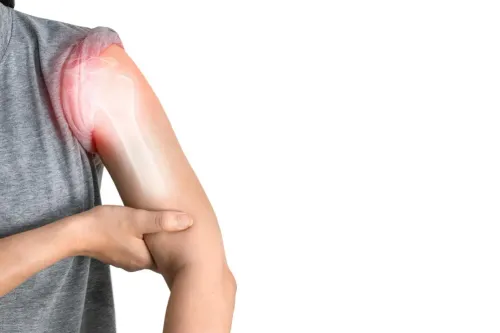
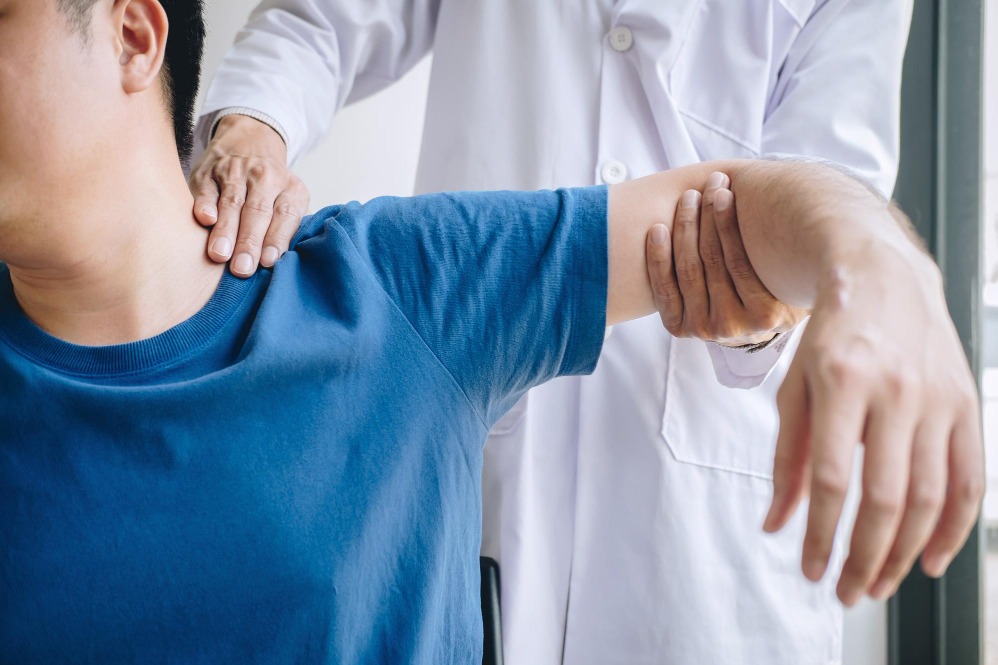
A shoulder can dislocate during contact sports, a fall, an awkward landing, or a forceful overhead movement. After the joint has been put back into position, pain may settle substantially. The bigger concern for some patients is what happens next.
A previous shoulder dislocation increases concern about future instability, particularly in young active people participating in demanding sports.
Why Can the Shoulder Dislocate Again?
The shoulder has a large range of movement because its socket is relatively shallow. Stability depends on several structures, including the labrum, capsule, ligaments, muscles, and surrounding bone.
During a traumatic dislocation, some of these stabilisers can be injured.
A labral injury commonly associated with anterior instability may make the shoulder more vulnerable to another episode. Bone damage to the socket or humeral head can also become important, particularly after repeated dislocations.
Symptoms Between Dislocations Matter
Instability does not always mean the shoulder completely comes out of its socket.
Patients may describe:
- A slipping sensation
- Apprehension with the arm overhead
- Fear during throwing
- Instability during gym exercises
- Reduced confidence in contact sports
- Partial slipping episodes
- Repeated complete dislocations
These symptoms help indicate whether the shoulder has regained reliable stability.
Rehabilitation Can Be Appropriate
After selected first-time dislocations, non-surgical management may include a period of protection followed by progressive rehabilitation.
Physiotherapy can work on movement, rotator cuff strength, scapular control, proprioception, and gradual return to activity.
The suitability of this approach depends on factors such as age, sport, injury pattern, structural damage, and recurrence risk.
A recreational walker has very different shoulder demands from a wrestler, goalkeeper, swimmer, or overhead athlete.
Recurrent Dislocation Requires Detailed Evaluation
Repeated episodes can produce additional damage.
Each dislocation may further affect the labrum, capsule, cartilage, or bone. Consequently, treatment decisions should consider not only how often the shoulder has dislocated but also what structural changes have occurred.
MRI can assess soft tissues, while CT may be useful when significant bone loss needs to be measured.
When Is Stabilisation Surgery Considered?
Surgery may be discussed when recurrent instability interferes with sport or daily life, when structural damage creates substantial recurrence risk, or when conservative treatment has not restored adequate stability.
The correct procedure depends on the injury pattern.
Arthroscopic stabilisation can be appropriate in selected cases, while substantial bone loss or other complex instability patterns may require a different strategy.
This is why choosing a procedure based only on the label “shoulder dislocation” is insufficient.
Returning to Sport Safely
Return to play requires restoration of strength, range, control, confidence, and sport-specific function.
Contact athletes may need to demonstrate shoulder stability under progressively demanding conditions before returning to competition.
For active patients in Mumbai, Dr Pranjal Kodkani provides assessment of shoulder instability with a focus on arthroscopy, sports injuries, and joint preservation. The evaluation considers both structural damage and the physical demands the patient wants to resume.
Repeated shoulder instability can become increasingly disruptive if it is managed only one episode at a time. Understanding the underlying damage allows treatment to focus on creating a shoulder that remains dependable during the activities that matter to the patient.
Keywords