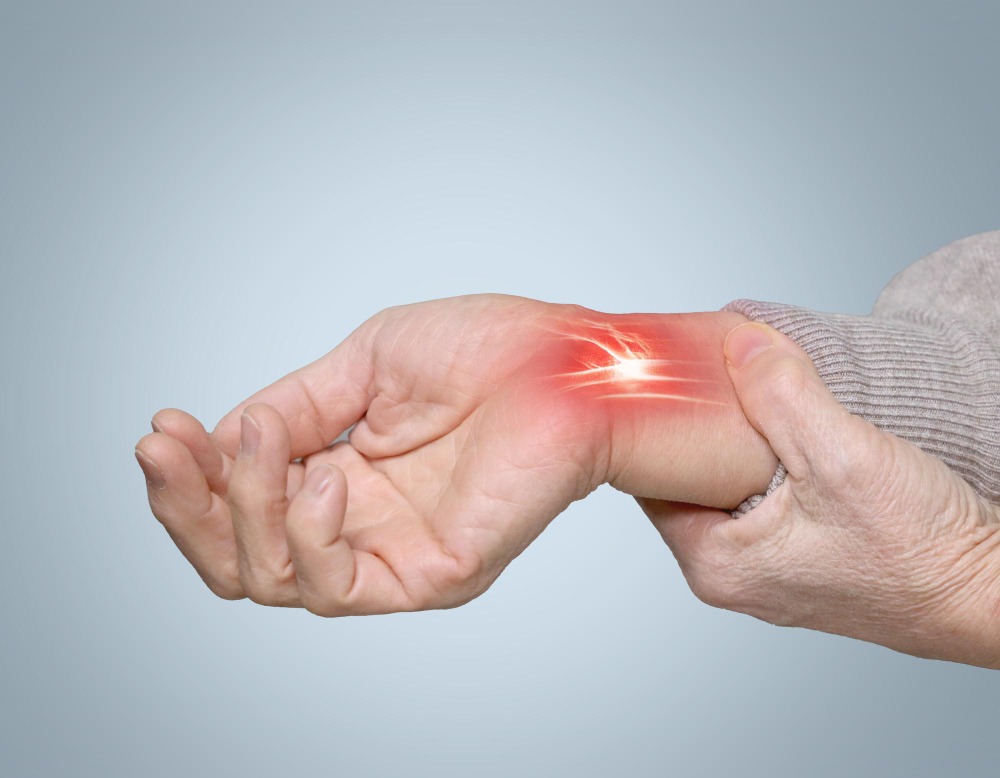
Wrist pain on the little-finger side can make surprisingly simple activities difficult. Turning a key, lifting a pan, performing push-ups, holding a racquet, or rotating the wrist may suddenly become uncomfortable.
One possible cause is a TFCC tear. The triangular fibrocartilage complex, commonly abbreviated as TFCC, consists of structures that contribute to stability and load distribution on the ulnar side of the wrist.
How Can a TFCC Tear Occur?
A traumatic tear can occur when someone falls onto an outstretched hand or when the wrist is forcefully twisted.
Sports involving racquets, bats, weights, gymnastics, or repetitive wrist rotation may also place substantial stress on the area.
Degenerative changes can develop gradually, particularly when repeated loading affects the wrist over time.
Common Symptoms
Patients may notice:
- Pain on the little-finger side of the wrist
- Clicking during rotation
- Reduced grip strength
- Pain when pushing up from a chair
- Discomfort while lifting
- Pain during racquet sports
- A sense of wrist instability
The symptoms can overlap with several other wrist conditions, making accurate examination important.
How Is the Problem Evaluated?
Assessment generally begins with the injury history and physical examination.
The clinician may evaluate tenderness, wrist stability, forearm rotation, grip-related pain, and movements that reproduce symptoms.
X-rays can help evaluate bone alignment or associated injury. MRI may be recommended to assess soft tissues, although imaging findings need to be interpreted alongside symptoms and examination.
Not every MRI abnormality is necessarily responsible for the patient's pain.
Is Surgery Always Necessary?
No.
Some TFCC injuries can be treated using activity modification, temporary immobilisation or support, medication when appropriate, followed by structured rehabilitation.
The type of tear is important because different areas of the TFCC have different healing potential.
Surgery may be considered when instability is significant, symptoms persist despite appropriate conservative treatment, or the tear characteristics make operative management appropriate.
Arthroscopy can allow direct evaluation of structures inside the wrist and treatment of selected lesions.
Athletes Need Sport-Specific Planning
Returning to activity depends on more than grip strength measured in isolation.
A tennis player repeatedly rotates and loads the wrist. A gym enthusiast may place high compressive loads through the wrist during pressing exercises. A cricketer may experience substantial forces during batting or fielding.
Rehabilitation should progressively reproduce these demands rather than moving directly from rest to unrestricted sport.
When Should You Seek Specialist Assessment?
Persistent ulnar-sided wrist pain following trauma deserves evaluation, especially when there is clicking, weakness, instability, or difficulty returning to sport.
Patients should also seek assessment when a presumed “wrist sprain” fails to improve as expected.
For active adults in Mumbai, Dr Pranjal Kodkani's sports orthopaedic practice assesses joint injuries with an emphasis on restoring function while preserving healthy tissue whenever possible. A detailed evaluation can help determine whether symptoms arise from the TFCC or another wrist structure.
A TFCC tear can be small in anatomical size yet significant in functional impact. Correctly identifying the injury is therefore more useful than repeatedly resting the wrist without understanding why loading continues to cause pain.
Keywords